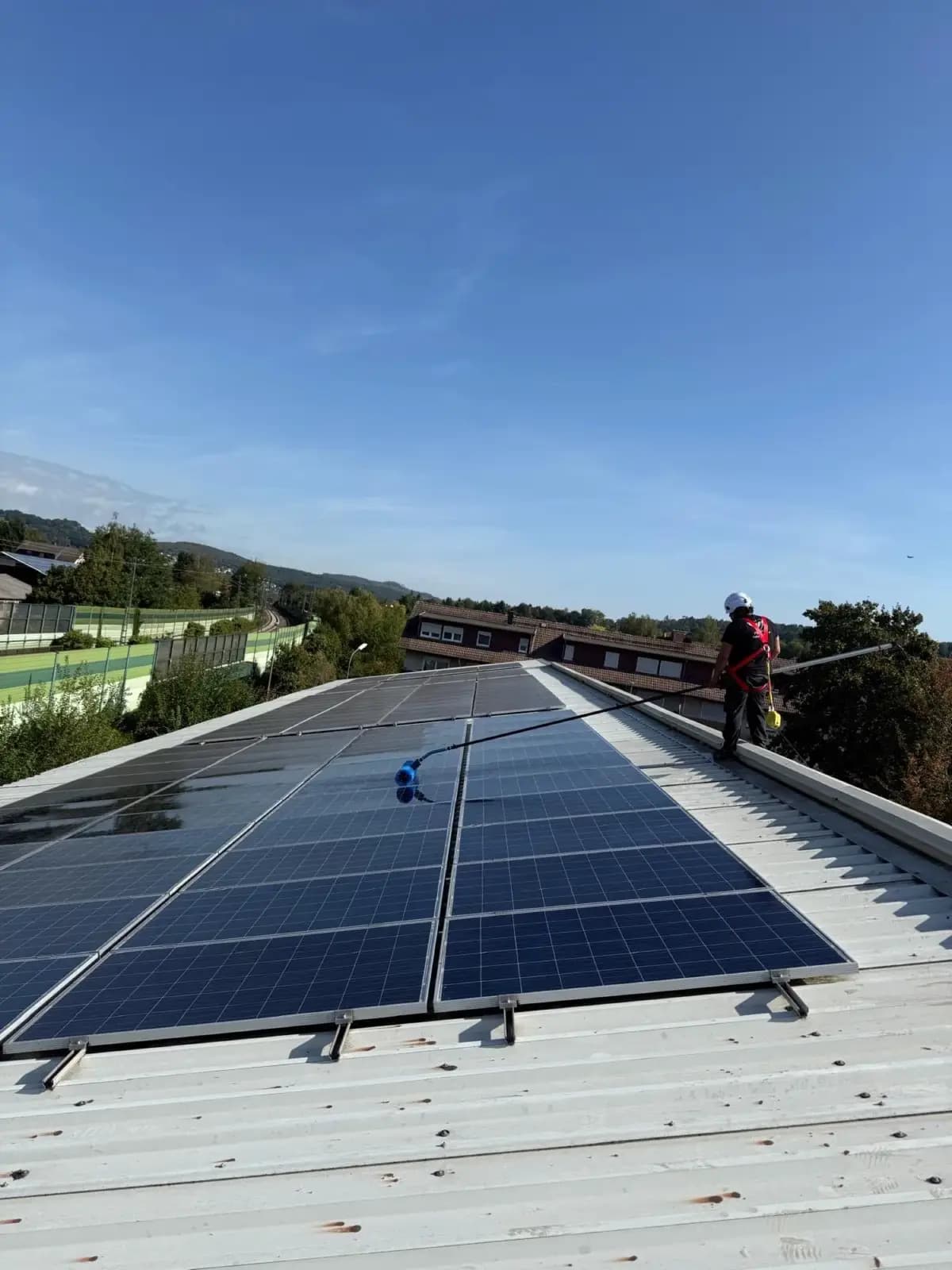
PV system cleaning: focus on commercial and industrial
Dust, pollen, bird droppings and organic deposits can reduce the yield of your PV system. We clean modules, frames and, by arrangement, exposed structures gently and methodically, in line with common manufacturer guidance and with a focus on occupational safety.
We plan jobs around weather and access: commercial and industrial roofs, carports and ground-mounted systems. Selected private PV projects by arrangement. Transparent coordination on access routes, for commercial sites with facility or plant management.
Why clean PV modules?
Dirty glass surfaces reduce incoming radiation; depending on location and degree of soiling, measurable yield losses can occur. Dust, pollen, bird droppings and organic deposits form a diffuse layer on the module surface that partly reflects or absorbs sunlight before it reaches the solar cells. Studies and field reports show yield reductions of 10–30% for heavily soiled systems.
So-called hotspots are particularly critical: areas of localised soiling (e.g. individual bird droppings) that affect a single module disproportionately. Because of the series connection effect, one soiled module can limit the output of an entire string, so the yield loss is far greater than the share of affected module area would suggest.
Wrong cleaning methods (excessive water pressure, unsuitable chemicals, hard scrapers or abrasive sponges) can permanently damage anti-reflective coatings and thereby put warranty claims at risk. We use only suitable techniques: soft brushes, fully demineralised osmosis water without chemicals and a fall-protected way of working, matched to your system and the manufacturer's recommendations.
Scope of services
Module surfaces
Gentle cleaning of all glass surfaces with soft brushes and fully demineralised osmosis water. Frames, mounting angles and module type (monocrystalline, polycrystalline, thin-film) are taken into account.
Access & occupational safety
Careful planning of access routes, roof safety and fall protection in accordance with DGUV regulations. Use of rope safety systems or aerial work platforms depending on roof shape and pitch.
Cleaning intervals & documentation
Recommendation of individual intervals based on site factors (agriculture, industry, proximity to roads, poplar fluff). Documentation of every job with date, condition and any irregularities.
Visual inspection & combination
During cleaning we check for visible defects such as cracks, damaged frames or loose cable glands. Can be combined with Equipment cleaning or industrial cleaning on site.
Our cleaning process in detail
We work with osmosis pure water from our mobile reverse osmosis unit (up to 410 litres per hour, produced on site) and soft carbon-fibre or microfibre brushes. The process needs no cleaning chemicals, which protects the coatings and avoids cleaning agent residues. When drying, osmosis water leaves no limescale marks or streaks.
- 1Inspection & safety planning: Before the job we check roof access, pitch angle and substrate stability and define safety measures.
- 2Pre-rinse: Modules are first pre-wetted with osmosis water to loosen coarse dirt (sand, dust) without applying mechanical pressure.
- 3Brush cleaning: Gentle cleaning with special soft brushes on telescopic poles or rotating brush systems. Stubborn organic deposits are treated selectively.
- 4Final rinse & visual inspection: Final rinse with fresh osmosis water. Visual check for residues, visible module damage and irregularities.
PV cleaning from our jobs
Hall roofs, tiled roofs, solar thermal systems and PV facades: cleaned with osmosis water, telescopic brush, aerial work platform and fall protection – real jobs by our teams.
11 Photos · swipe to view
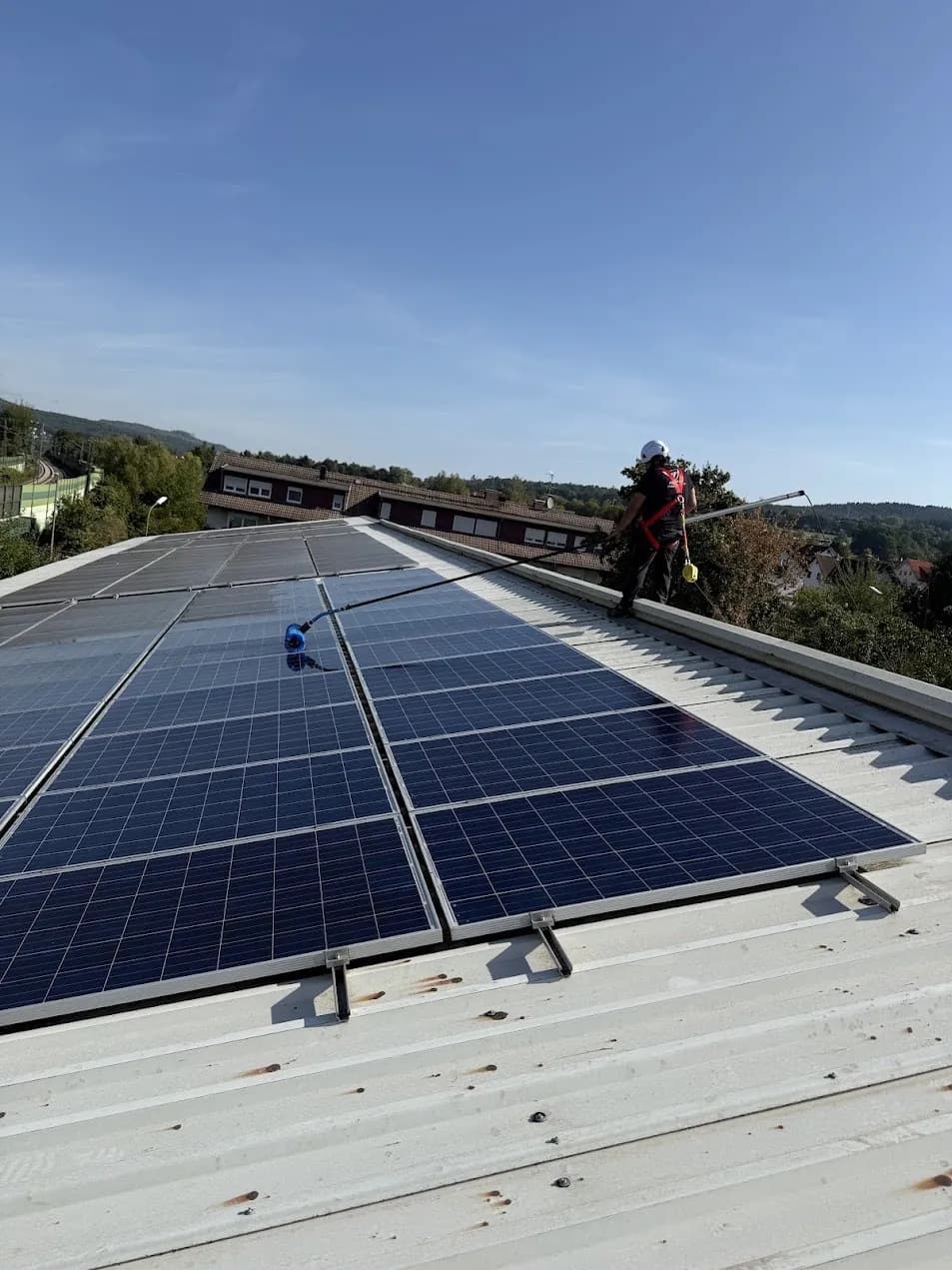
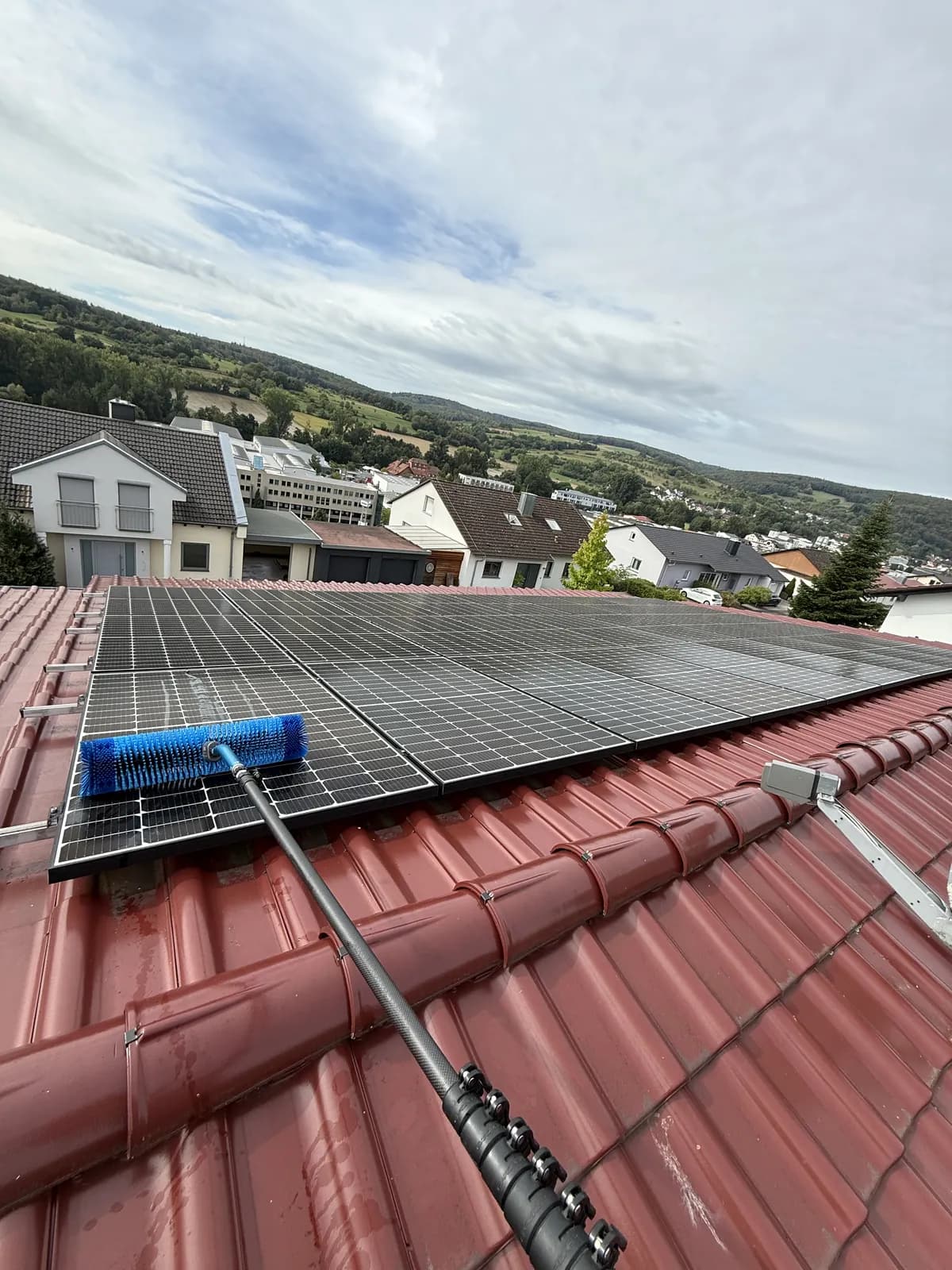
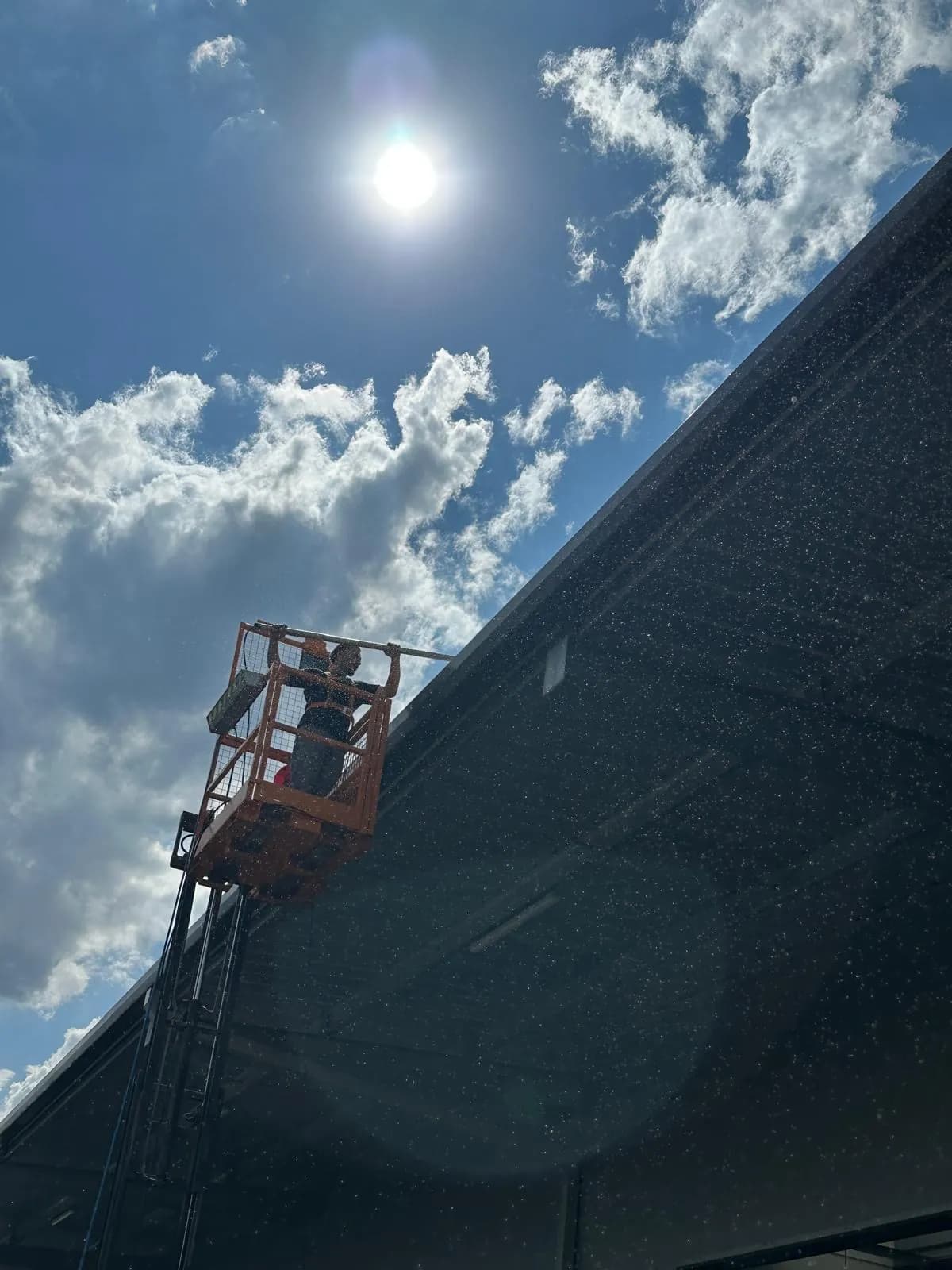
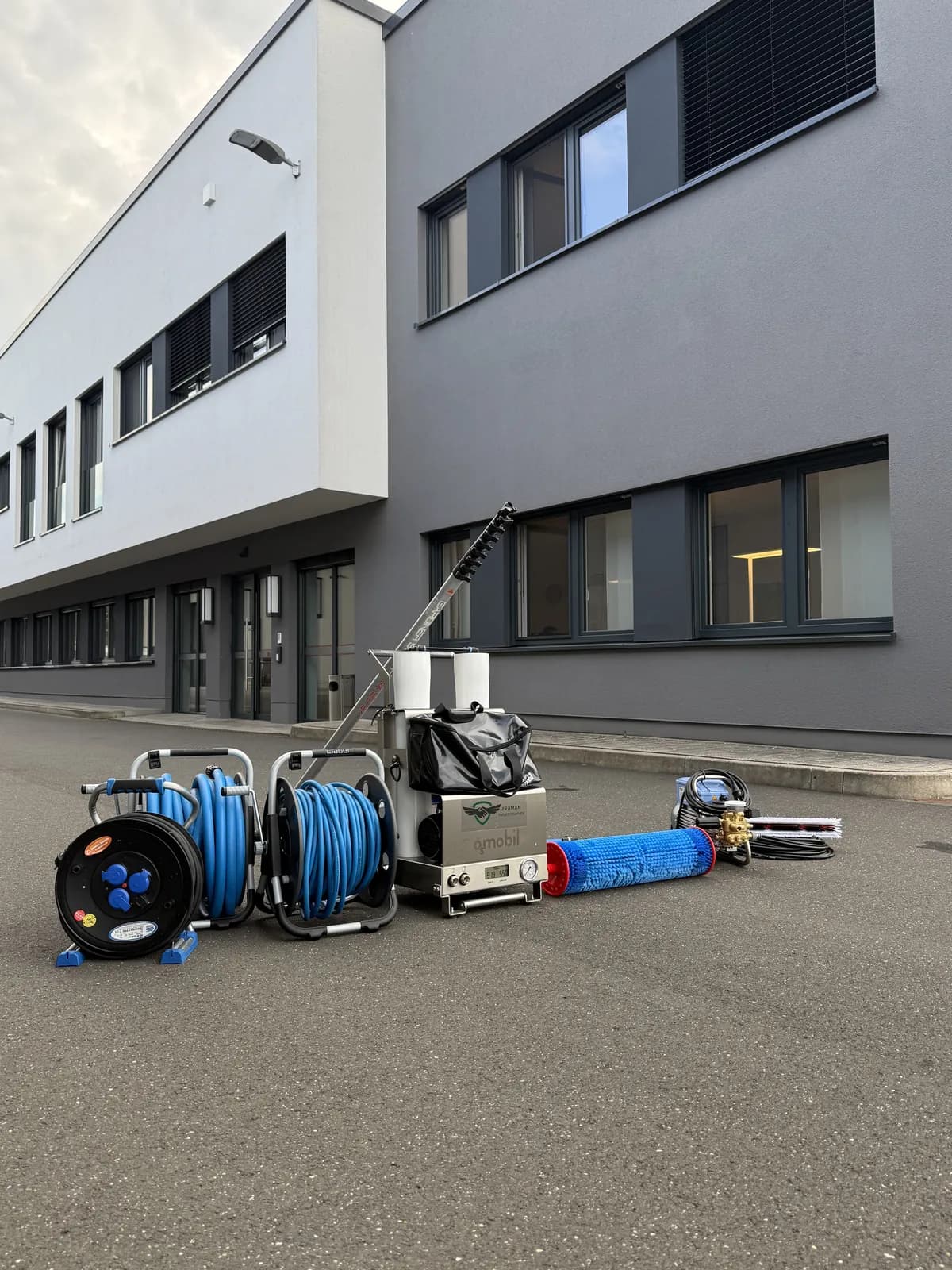
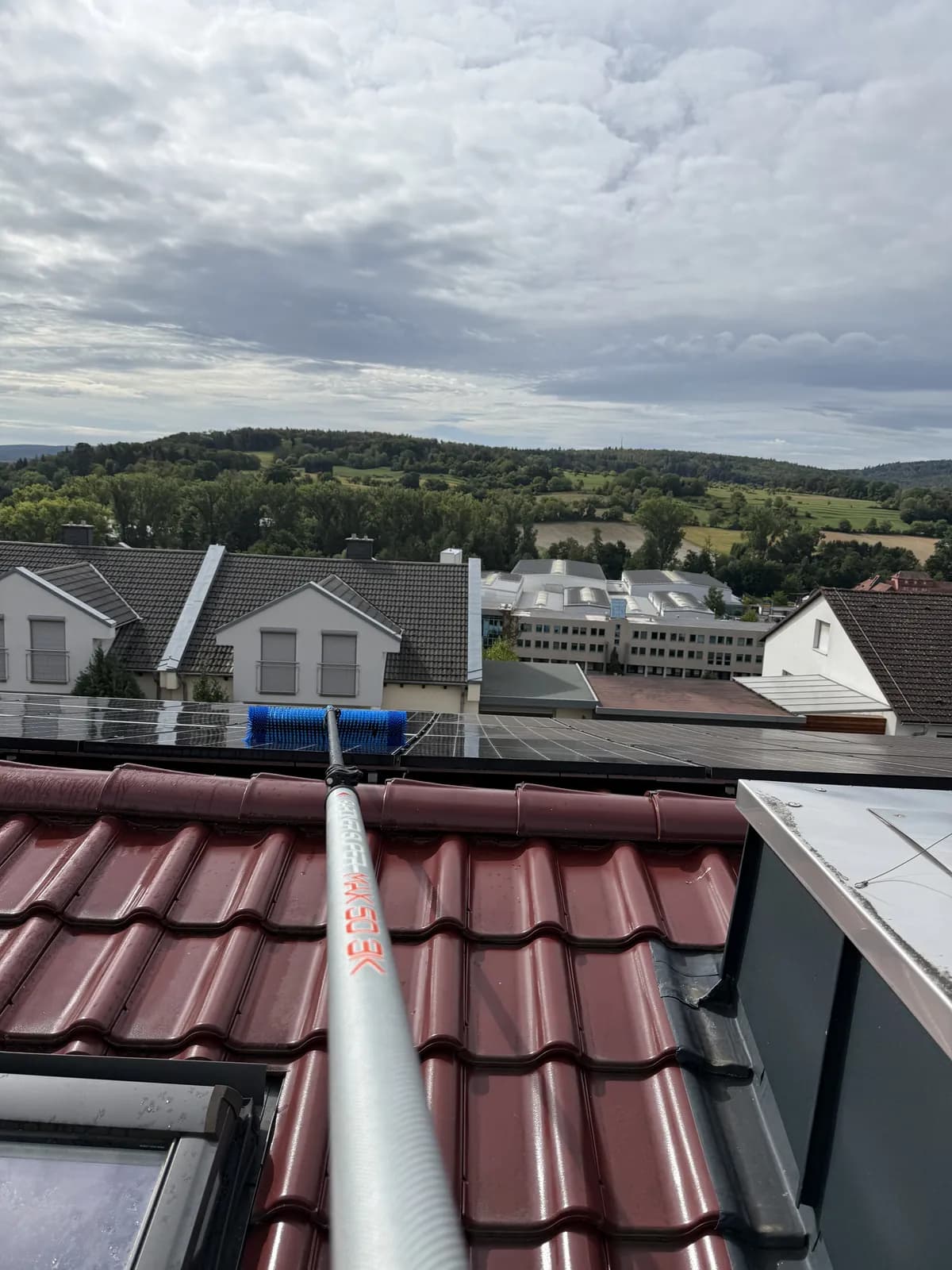
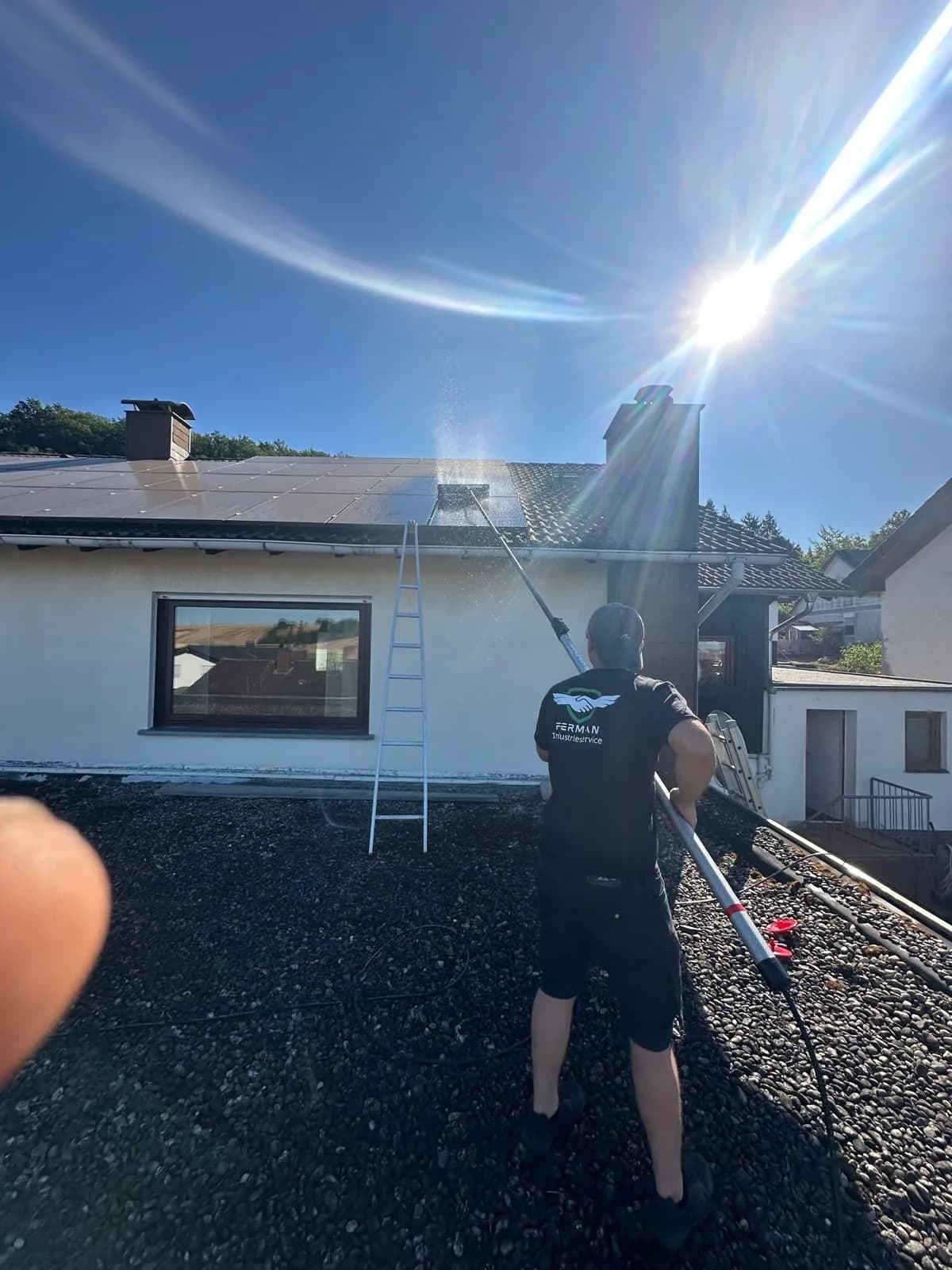
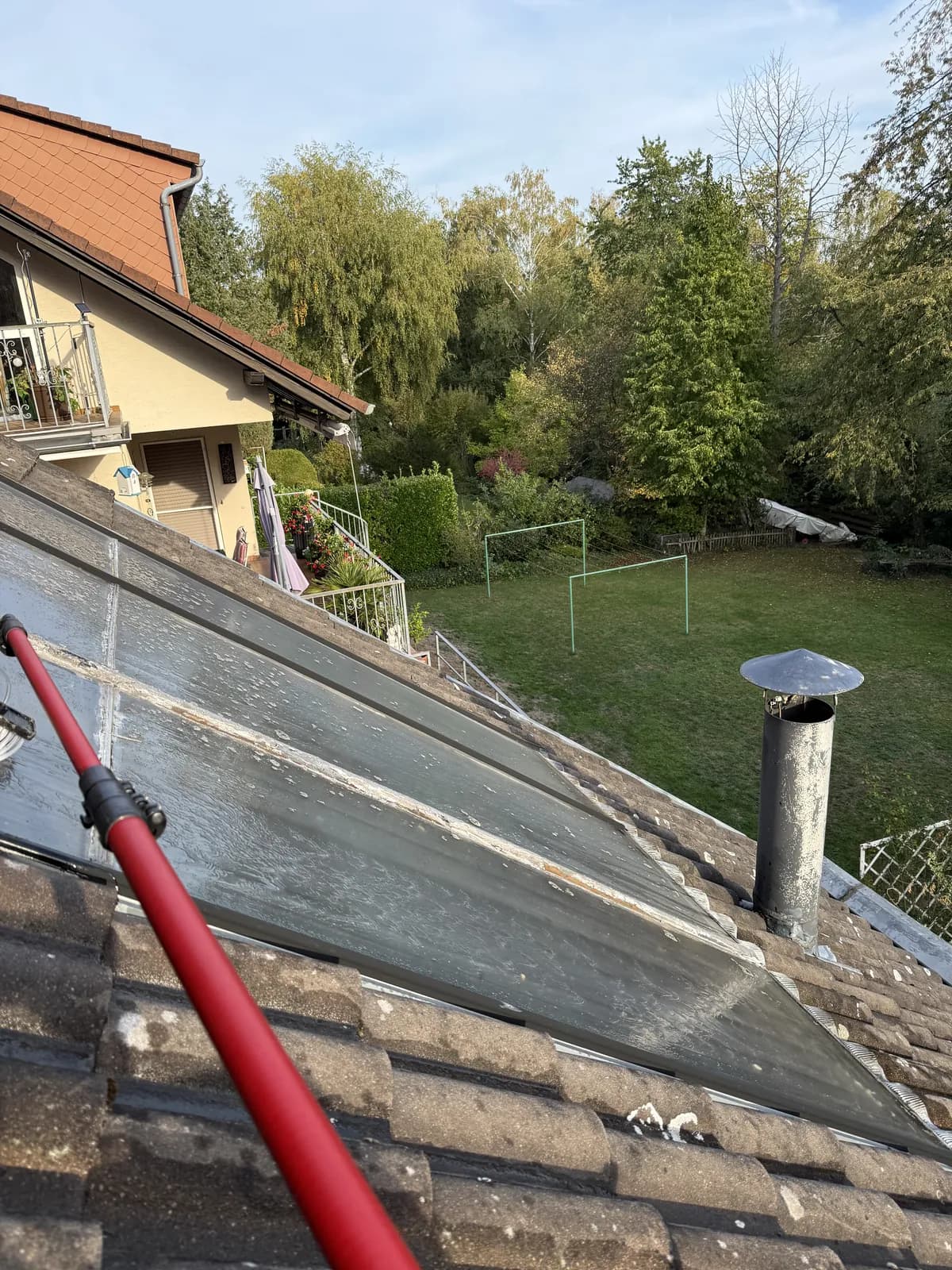
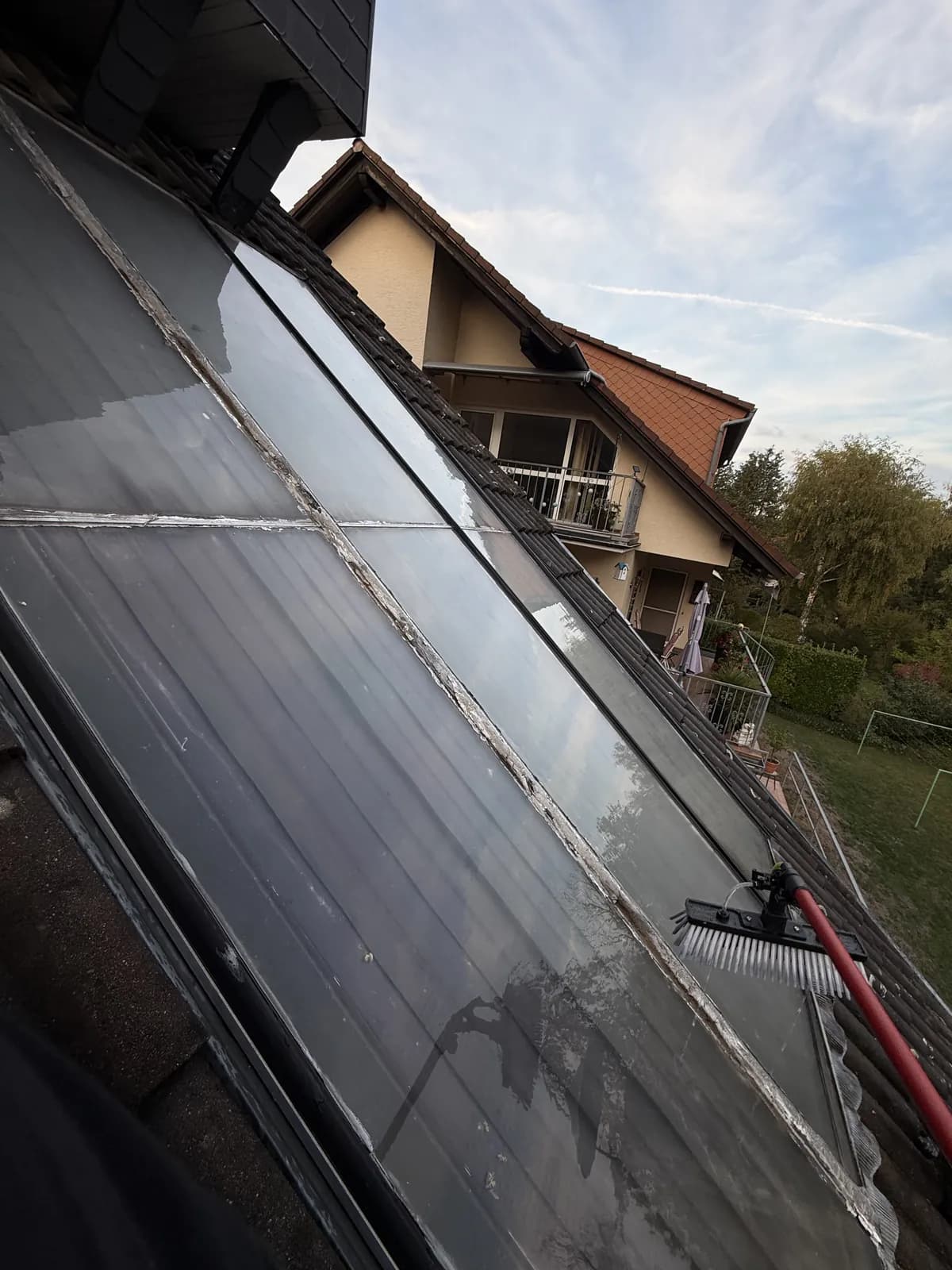
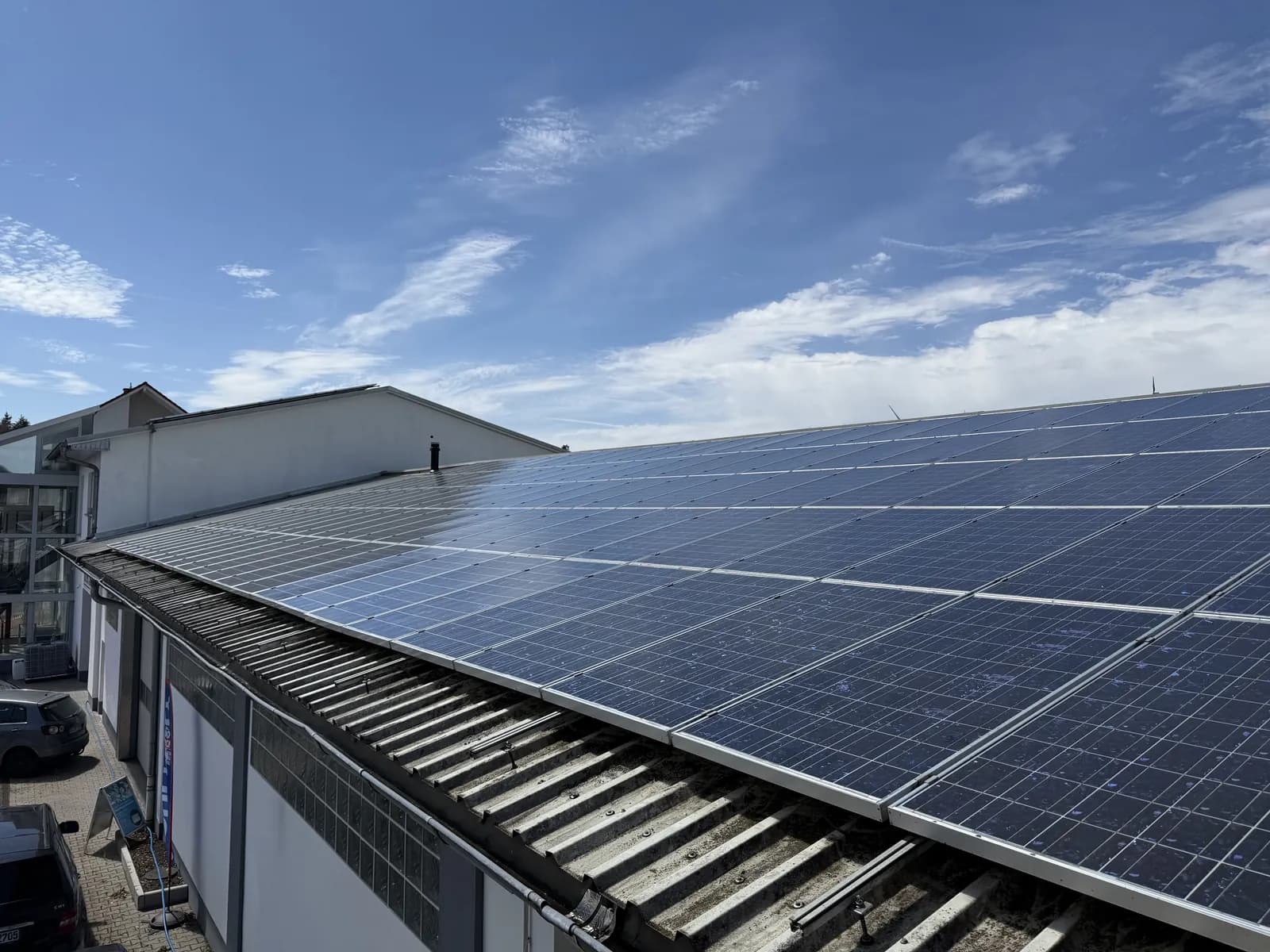
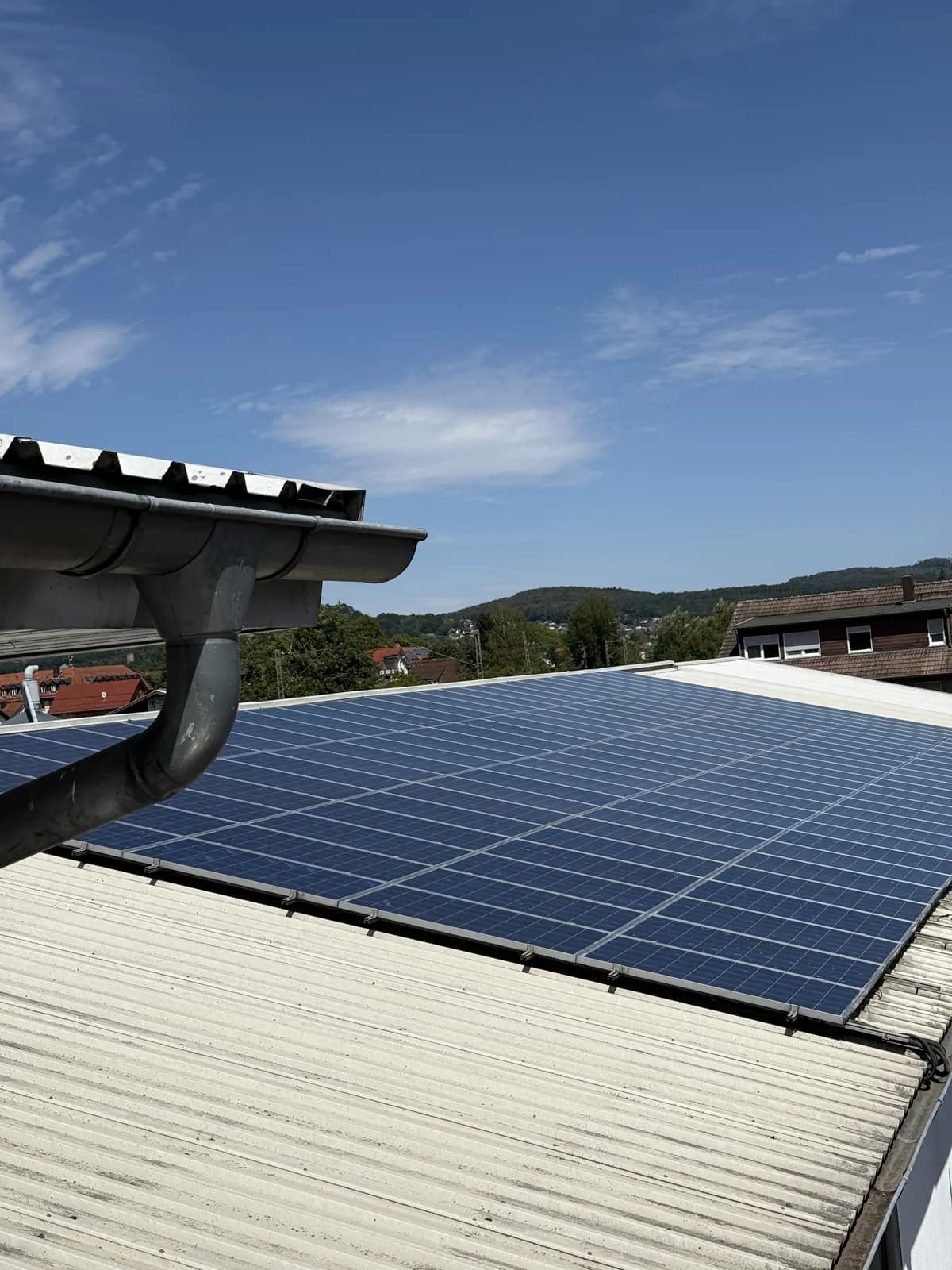
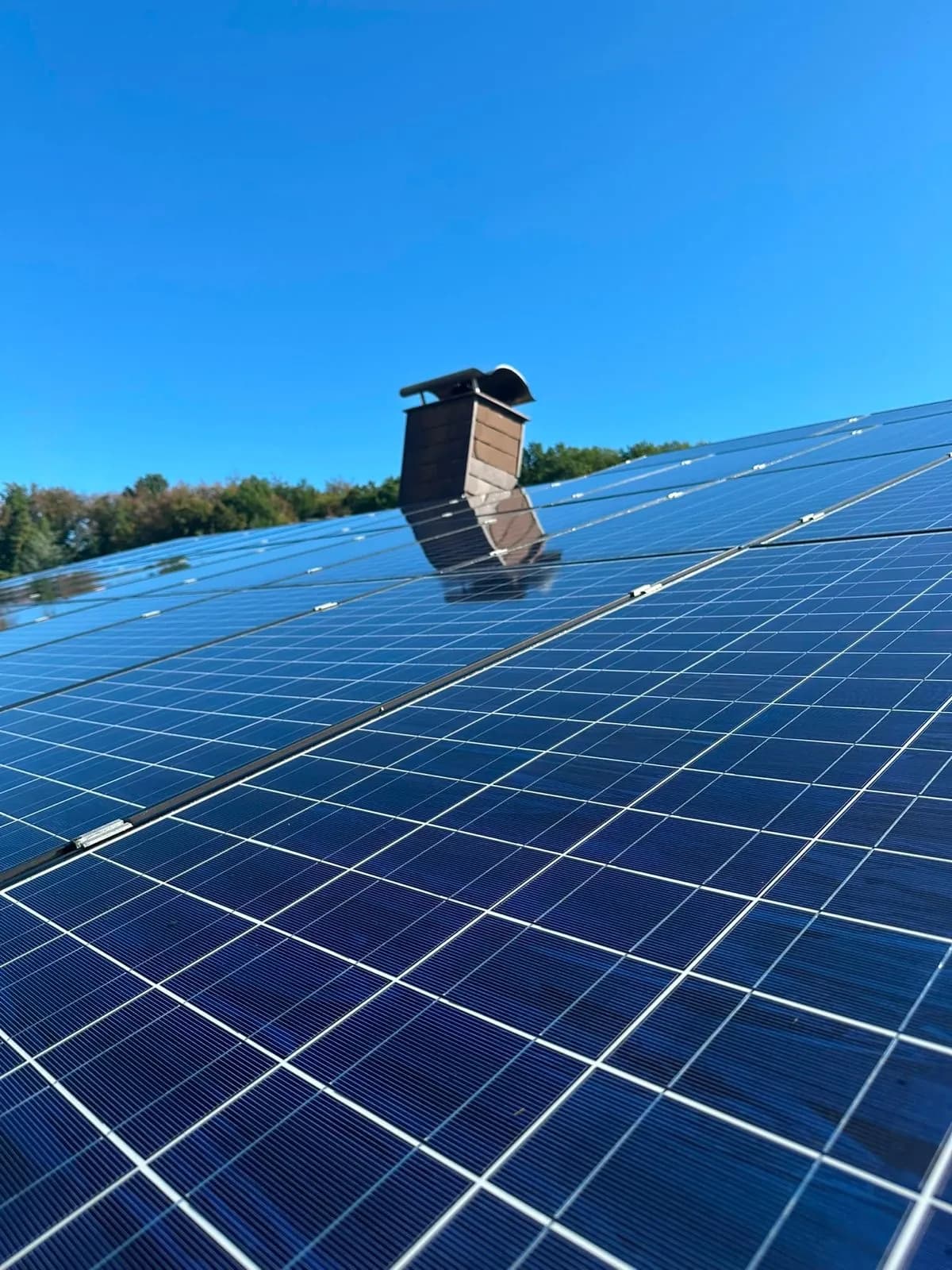
All photos are from Ferman Industrieservice's own jobs.
Companies we work for: PACO, Deutsche Bahn, KGM Kugelfabrik, Bio Breadness, Dreiturm, Hepp GmbH, Saubermacher, Blumer Lehmann, ML Stein, Aarsleff.
How often should PV systems be cleaned?
There is no universal answer; the best interval depends on the location and local environmental conditions. As a rule of thumb: the higher the environmental load, the shorter the interval.
| Site situation | Recommendation | Reason |
|---|---|---|
| Residential area, little traffic | 1× per year | Low dust load, rain is sufficient as natural cleaning |
| Urban location, heavy traffic | 2× per year | Soot, exhaust fumes and fine dust settle faster |
| Agricultural surroundings | 2–3× per year | Pollen, fertiliser, field dust and harvest abrasion |
| Industrial site | 3–4× per year | Production dust, oil, industrial soot |
| After storms, hail, sandstorms | As needed | Independent of the regular interval |
PV cleaning in Hesse
Ferman Industrieservice cleans photovoltaic systems throughout the Rhine-Main region and Hesse, from private homes and commercial roofs to large industrial ground-mounted systems. We are active in Frankfurt, Hanau, Fulda, Gelnhausen, Darmstadt, Wiesbaden, Bad Hersfeld and other cities. We also clean large solar parks and ground-mounted systems across Germany; rooftop and smaller systems in Hesse.
For commercial customers with several sites, we offer framework agreements that handle scheduling, documentation and invoicing centrally for all properties. Contact us for an individual quote.
Frequently asked questions about PV cleaning
How much yield do I lose through dirty modules?▼
Depending on location and degree of soiling, yield reductions of 10–30% can occur. Hotspot soiling (e.g. bird droppings on a single module) is particularly critical, as it can affect an entire string through the series connection effect.
Does cleaning damage the modules or the warranty?▼
When carried out properly and in line with the manufacturer's guidance, cleaning is gentle on the material. We use soft brushes, fully demineralised osmosis water and no aggressive chemicals. Wrong methods (hard brushes, pressure washers, chemicals), however, can damage coatings and put warranty claims at risk.
Do I have to switch off the system for cleaning?▼
Whether a shutdown is required depends on the system concerned, the manufacturer's specifications and the on-site safety requirements.
How often should I have it cleaned?▼
That depends on the location: once a year in normal residential areas, twice in urban locations or with higher dust levels, 3–4 times at industrial sites or in agricultural surroundings (pollen, field dust). After storms or hail we recommend cleaning as needed.
Do you also clean ground-mounted systems and large commercial roofs?▼
Yes. We have experience with ground-mounted systems, large industrial and commercial roofs and carport systems. For large systems, depending on access, we use telescopic systems, lifting platforms or rope safety techniques.
What does PV cleaning cost?▼
Costs depend on the number of modules, roof shape and access situation. After a short enquiry with the number of modules and a description of the roof, we will promptly prepare a quote for you.
Quote for your PV system
Output in kWp, access, height and desired intervals; we will get back to you promptly.
Request a quote+49 176 623 71841Locations by postcode
All locationsRequest a free quote
Tell us briefly what you need. We are available 24/7, reply within 2 hours and send you a transparent quote within 24 hours, often sooner.