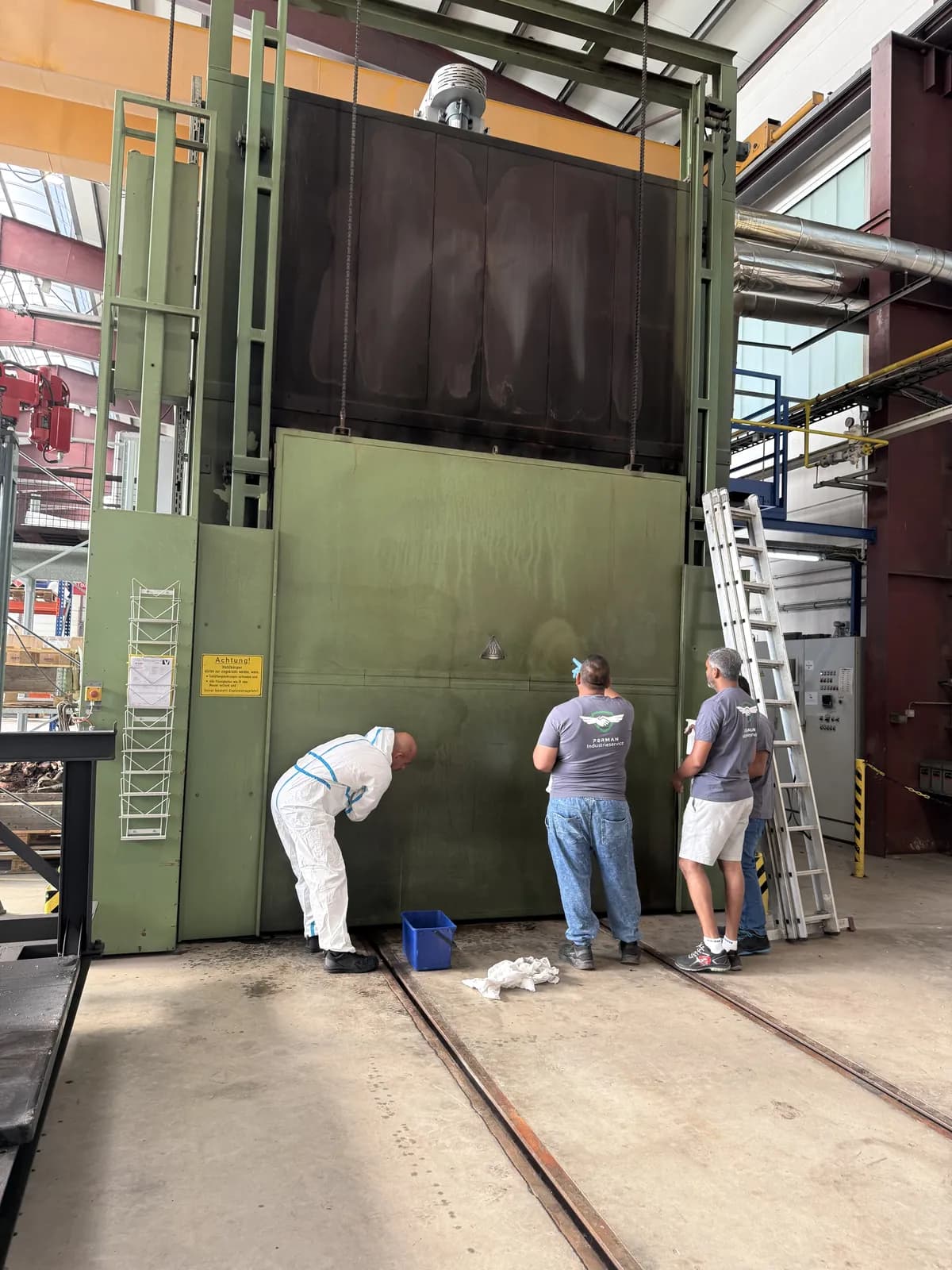
Key points at a glance
- ✓Industrial cleaning is a highly specialised service that goes far beyond ordinary building cleaning.
- ✓It safeguards the functionality of plant, increases occupational safety and extends the life of machinery.
- ✓The work requires specialised techniques (high pressure up to 300 bar), experienced, briefed teams and strict safety concepts.
- ✓Punctuality and flexibility, including at night and at weekends, are crucial for smooth operations.
- ✓Professional documentation and compliance with requirements are necessary for quality and audits.
What is industrial cleaning: definition and how it differs from ordinary building cleaning
Industrial cleaning is a highly specialised service that aims to free production plant, machinery, halls and infrastructure in industrial environments from stubborn soiling such as oil, grease, industrial soot, chemical residue or production waste. It differs fundamentally from regular building cleaning, which primarily aims to maintain cleanliness in offices, corridors or sanitary facilities. The requirements for materials knowledge, technology and safety are considerably more complex and higher-risk in industry.
While building cleaning mostly works with standard cleaning agents and equipment, industrial cleaning requires high-pressure washing up to 300 bar, special industrial vacuums, chemical-technical methods and often the handling of hazardous substances. Staff must have comprehensive knowledge of occupational safety (use of PPE), environmental requirements and specific industry standards. It is not just about appearance, but about ensuring the functionality and safety of complex plant and production processes.
Another key difference lies in the scope of the objects to be cleaned and the associated logistics. Industrial cleaning often covers the cleaning of large machine parks, production lines, tanks, silos, ventilation systems or entire factory halls, which require precise coordination and detailed planning. Choosing the right method and the right cleaning agent is crucial to avoid damaging materials and to maximise the efficiency of the cleaning process, which requires in-depth expertise.
Where industrial cleaning is used: industries, use cases, typical sites
The need for professional industrial cleaning extends across a wide range of industries in which specific contaminants and high safety standards call for specialised methods. Ferman Industrieservice serves a broad range of customers across Germany:
Heavy machinery and metalworking
Oil, swarf, cooling lubricants and metal dust typically accumulate here. Cleaning machine tools, production lines, hall floors and extraction systems is crucial for manufacturing precision and occupational safety.
Chemicals and petrochemicals
Handling aggressive chemicals, residues and hazardous substances requires the highest safety standards. Cleaning tanks, reactors, pipelines and collection trays is necessary here, often under explosion protection conditions and with special PPE.
Energy generation and power plants
Facilities are often exposed to heavy industrial soot, dust and oil. Cleaning turbines, boilers, generators and ventilation systems optimises efficiency and prevents fire protection risks, which contributes significantly to operational safety.
Food industry (in line with the client's site-specific hygiene requirements)
Hygiene comes first here. Cleaning of production plant, cold stores and storage areas must comply with strict HACCP guidelines to prevent contamination and ensure product safety.
Industrial cleaning methods: high pressure, industrial vacuums, chemicals, use of PPE, waste disposal
Choosing the right cleaning method is crucial for efficiency and safety. Below, we compare the approaches of standard and industrial cleaning to illustrate the complexity and specialisation of industrial cleaning:
| Criterion | Standard cleaning | Industrial cleaning |
|---|---|---|
| Type of soiling | Light, everyday soiling (dust, fingerprints, light stains). | Stubborn industrial soiling (oil, grease, soot, resins, chemical residue). |
| Techniques & equipment | Manual cleaning, vacuum cleaners, mops, scrubber-dryers (low pressure). | High-pressure cleaning (up to 300 bar), dry ice blasting, industrial vacuums (wet/dry), chemical-technical methods, steam cleaning. |
| Cleaning agents | All-purpose cleaners, sanitary cleaners, glass cleaners (standardised products). | Specialist cleaners, solvents, acids, alkalis (specific to material and soiling, often hazardous substances). |
| Occupational safety (PPE) | Usually gloves, safety goggles if needed. | Full personal protective equipment (PPE): respiratory protection, chemical protection suits, safety shoes, hearing protection, depending on the risk assessment. |
| Waste disposal | General waste, paper, organic waste (municipal disposal). | Specialised disposal of hazardous substances, industrial waste and oil sludge in accordance with the German Circular Economy Act (KrWG) and TRGS. |
| Service area | Offices, corridors, sanitary areas, retail. | Production halls, machine parks, plant, tanks, silos, pipelines, cleanrooms, Ex zones. |
Industrial cleaning during ongoing operations: coordination, shift schedule, access permits, safety
Carrying out industrial cleaning during ongoing operations poses particular challenges that require precise planning and coordination. To avoid production losses and ensure safety, cleaning work often has to take place at night, at weekends or during planned shutdowns. Ferman Industrieservice specialises in meeting these requirements and offers flexible working hours that fit into your operations without disruption. This requires close coordination with your production and facility management teams.
Detailed access permits must be clarified before work begins, especially in sensitive areas such as cleanrooms or Ex zones. A clearly defined shift plan and compliance with safety regulations are essential. Our teams adapt to the specific safety rules of your site and work closely with your safety officers. Communication is transparent and proactive, so that potential conflicts or disruptions to operations are identified and resolved early.
A key aspect is minimising disruption. This includes not only scheduling but also choosing low-noise techniques, cordoning off work areas and ensuring that no residue or cleaning agents affect the production process. Punctuality is of the utmost importance here so that operations can resume on time. Ferman Industrieservice ensures this through experienced teams and efficient project management from a single source, which secures control and quality.
Risk assessment and occupational safety, PPE, operating instructions, TRGS, explosion protection
Occupational safety is the top priority in industrial cleaning. Every cleaning task requires a comprehensive risk assessment under the German Occupational Safety and Health Act (§5 ArbSchG) to identify risks and take suitable protective measures. Ferman Industrieservice places the greatest importance on compliance with all relevant regulations and standards:
Personal protective equipment (PPE)
The appropriate PPE is selected and used on the basis of the risk assessment. This includes respiratory protection, chemical protective suits, protective gloves, safety shoes, safety goggles and hearing protection. Instruction in correct use is given before each job.
Operating instructions
For every task and for the handling of hazardous substances, we prepare detailed operating instructions in accordance with the German Hazardous Substances Ordinance (GefStoffV). These cover information on hazards, protective measures, rules of conduct and first aid.
Technical Rules for Hazardous Substances (TRGS)
The TRGS define the state of the art, occupational medicine and hygiene for handling hazardous substances. We ensure compliance with these rules, for example when storing, handling and disposing of cleaning chemicals and contaminated waste.
Explosion protection (Ex protection)
In areas with a potentially explosive atmosphere (Ex zones), special explosion-proof equipment and strict procedures to avoid ignition sources in line with the ATEX directives are required. Whether work there is possible is something we clarify in advance with the operator and their safety officer.
DGUV regulations and ArbStättV
We comply with the regulations of the German statutory accident insurance (DGUV) and the German Workplace Ordinance (ArbStättV) to ensure a safe working environment for our employees and your staff, including regular safety briefings and further training.
Compliance and documentation, cleaning records, QA evidence, audit preparation, ISO
In industry, transparency and traceability of cleaning work are of the utmost importance. Complete documentation is necessary not only for internal quality assurance, but also for audits, certifications (e.g. ISO 9001, ISO 14001) and compliance with legal requirements. Ferman Industrieservice produces detailed cleaning records that capture the scope of work, the agents used, the checks carried out and any special observations. These records serve as important QA evidence.
The documentation also includes safety data sheets for all chemicals used, disposal records for waste and proof of briefing for the personnel deployed. These documents are essential for demonstrating the conformity and quality of the service provided in external audits, for example under ISO standards or industry-specific standards such as HACCP in the food industry. Professional documentation minimises liability risks and builds trust.
We actively support you in preparing for audits by providing all relevant information and records in a structured way and in good time. This also includes compliance with occupational health and safety regulations and environmental requirements. With our precise way of working and transparent documentation, you can be confident that all requirements are met and focus on your core business. Our quality management ensures that all processes meet the highest standards and are continuously improved.
Step by step: how an industrial cleaning job works
A professional industrial cleaning job is a complex process that calls for careful planning and execution. Ferman Industrieservice follows a proven procedure to ensure efficiency, safety and the highest quality:
- 01
Needs analysis and quotation
We start with a detailed on-site inspection to establish the cleaning requirements precisely. We analyse the type of soiling, surface condition, accessibility and safety requirements. On this basis, we prepare a transparent quotation tailored to your site.
- 02
Risk assessment and job planning
A comprehensive risk assessment forms the basis for selecting the suitable cleaning techniques, chemicals and the necessary PPE. A detailed job plan including timeframe, personnel and equipment is drawn up, often taking shift schedules and plant downtime into account.
- 03
Preparation and safety set-up
On site, the work areas are cordoned off and secured, warning notices are put up and the required PPE is put on. Equipment and materials are made ready. Where necessary, machines are covered or parts are dismantled to allow effective cleaning.
- 04
Carrying out the cleaning
The experienced, briefed team carries out the cleaning according to plan, using high-pressure flushing up to 300 bar, industrial vacuums or chemical-technical methods. Compliance with safety regulations and operating instructions has top priority. Continuous quality checks accompany the process.
- 05
Waste disposal and documentation
Waste arising (e.g. oil sludge, contaminated water) is collected properly, separated and disposed of in accordance with legal requirements. Finally, a detailed cleaning record is produced, documenting all work carried out and the quality assurance.
Costs and prices of industrial cleaning, hourly rates, fixed prices, what drives the price
The costs of industrial cleaning services are complex and depend on various factors. A simple flat-rate price list is rarely practical, as each job has to be assessed individually. In principle, cost models can be divided into hourly rates per employee and fixed prices for clearly defined projects. Recurring, clearly described work can usually be planned as a fixed price; damage cases of unclear scope are more likely to be charged by time and effort. For fixed prices, a detailed needs analysis is indispensable.
The price is largely influenced by the type and degree of soiling: oil, grease, soot or chemical residues require different techniques and cleaning times. Accessibility of the objects to be cleaned also plays a role; areas that are hard to reach or work at height increase the effort. In addition, the specialist equipment required (e.g. high-pressure units up to 300 bar, explosion-proof industrial vacuum cleaners) and the associated operating costs are key cost drivers.
Other factors are the PPE required, disposal costs for special waste, the need to work outside regular operating hours (night or weekend surcharges) and the distance to the site. Ferman Industrieservice offers customers across Germany transparent cost calculations. Through careful analysis and clear communication, we make sure you receive a fair and comprehensible quote that covers every aspect of your cleaning needs, with no hidden costs.
Checklist: tendering and awarding industrial cleaning services
Requirements for the service provider
- ✓Evidence of training, occupational safety briefings and documentation of jobs.
- ✓Experience in your specific industry and with similar sites.
- ✓References from comparable projects and customers.
- ✓Willingness to plan flexibly (night/weekend work) and a dedicated contact person.
- ✓Proof of adequate business liability insurance.
Scope of services and specifications
- ✓Detailed description of the objects and areas to be cleaned.
- ✓Type and degree of soiling as well as special hazards (e.g. hazardous substances, Ex zones).
- ✓Desired cleaning methods and equipment to be used (e.g. high pressure up to 300 bar).
- ✓Requirements for waste disposal and documentation (e.g. disposal records).
- ✓Safety regulations and access restrictions at the site.
Contractual and organisational aspects
- ✓Transparent pricing (hourly rates, fixed prices, surcharges).
- ✓Dedicated contacts and communication channels.
- ✓Regular inspections and quality checks.
- ✓Agreements on punctuality and flexibility.
- ✓Clauses on liability and warranty.
Author
Tolga Ferman
Owner, Ferman Industrieservice
Practical knowledge from industrial and building cleaning in Hesse. As of: 2026-08-30.
Conclusion
Professional industrial cleaning is far more than cleanliness; it is an investment in the safety, efficiency and longevity of your industrial equipment. From a precise risk assessment through highly specialised techniques to complete documentation, every step requires expertise and the utmost care. Ferman Industrieservice is your experienced partner across Germany, including multi-day jobs on site and with large teams for major projects and shutdowns. We can be reached 24/7, get back to you in under 2 hours and also schedule jobs at night and at weekends. We know from practice what it takes to look after your production environment optimally and protect the value of your investments for the long term. Request your quote now – with you within 24 hours – or find out more on our service page: /leistungen/industriereinigung.
Frequently asked questions
How are the costs of industrial cleaning calculated?+
The costs of industrial cleaning are calculated individually, based on factors such as the degree and type of soiling, the size and accessibility of the objects to be cleaned, the specialist equipment required (e.g. high pressure up to 300 bar), the use of special cleaning agents and the cost of waste disposal. Working hours (nights, weekends) and the manpower required also play a role. After an on-site inspection, Ferman Industrieservice prepares a transparent and detailed quotation that takes all these aspects into account, giving you a clear overview of costs.
How often should industrial cleaning be carried out?+
The frequency of industrial cleaning depends heavily on the industry, the production processes and the degree of soiling. In the food industry, daily cleaning is often standard (HACCP), while in other sectors such as heavy machinery, quarterly or annual deep cleaning may be sufficient. Preventive maintenance cleaning can extend the service life of machines and reduce breakdowns. We are happy to advise you on setting an optimal cleaning interval tailored to your specific needs and legal requirements.
What preparations does my company need to make before a job?+
For a smooth process, it helps if your company makes a few preparations in advance. These include providing access permits, informing employees about the upcoming work, clearing work areas, ensuring electricity and water supply and providing relevant safety data. Close coordination with Ferman Industrieservice beforehand ensures that all necessary measures are taken and the job can run efficiently and safely.
Which techniques are used for particularly stubborn soiling?+
For particularly stubborn soiling, we rely on a combination of specialised techniques. These include high-pressure washing at up to 300 bar, which loosens even caked-on layers of oil and grease. Chemical-technical methods with specially matched cleaning agents allow the removal of industrial soot, resins or chemical residues. These are complemented by powerful wet and dry industrial vacuum cleaners, dry ice blasting or steam cleaners, so that even hard-to-reach spots are cleaned thoroughly and residues are removed completely.
Are your employees trained to handle hazardous substances?+
Before every job, our experienced teams are briefed on the hazardous substances and safety data sheets of your site and work with the appropriate PPE. Evidence is available on request. The Technical Rules for Hazardous Substances (TRGS) and DGUV regulations are decisive; we coordinate the risk assessment and operating instructions with your business, especially in demanding environments.
How do you ensure the quality of the cleaning?+
We ensure the quality of our cleaning services through several measures. First, a detailed needs analysis is carried out and a cleaning plan drawn up to fit your shift operation and workflow. During the job, our experienced supervisors carry out continuous checks. Once the work is complete, a joint acceptance takes place with the customer. In addition, every job is documented from A to Z: you receive detailed cleaning records that transparently prove the scope of the work performed. Feedback from every acceptance flows directly into the next job.
What is the difference between industrial cleaning and ordinary building cleaning?+
The main difference lies in the degree of specialisation and the requirements. Normal building cleaning focuses on everyday cleanliness in offices and sanitary areas. Industrial cleaning, on the other hand, is designed to remove stubborn industrial contamination such as oil, grease, soot and chemicals in production environments. It requires special techniques (e.g. high pressure up to 300 bar), experienced, briefed teams with full PPE, handling of hazardous substances, special waste disposal and compliance with the strictest safety and environmental regulations – far beyond the capabilities of standard building cleaning.