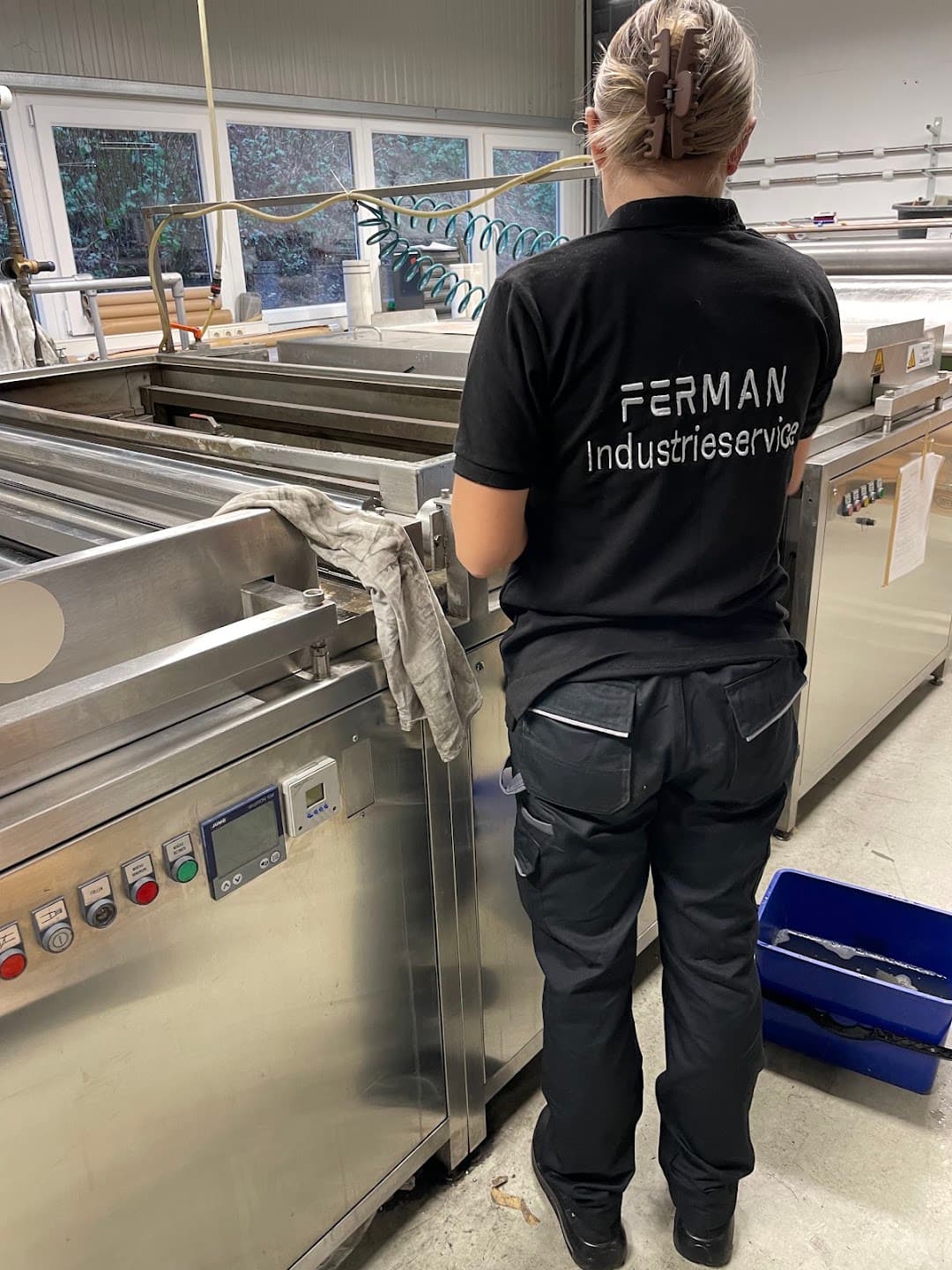
Dry ice blasting: gentle on materials & efficient
Professional dry ice blasting for machines, plant and sensitive areas. Gentle on materials, residue-free, environmentally friendly. No dismantling needed, no drying time, electrically safe.
What is dry ice blasting?
Dry ice blasting is an innovative cleaning process in which CO₂ pellets (frozen carbon dioxide at -79°C) are shot onto the surface to be cleaned using compressed air. The pellets evaporate on impact without leaving a residue; only the loosened soiling remains.
The process is gentle on materials, as it is non-abrasive and leaves no moisture. Ideal for sensitive surfaces, electrical components and areas that cannot be dismantled.
Advantages of dry ice blasting
Gentle on materials
Non-abrasive, no damage to sensitive surfaces, seals or paintwork.
Residue-free
CO₂ evaporates on impact: no secondary contamination, no waste, no cleaning agent residues.
Environmentally friendly
No chemicals, no water; CO₂ is an industrial by-product, climate-neutral.
No dismantling needed
Machines and plant can be cleaned on site, saving time and costs.
Electrically safe
Also suitable for electrical components, switch cabinets and controls; no moisture.
No drying time
Ready for use again immediately, no waiting times for drying.
Areas of application for dry ice blasting
Dry ice blasting is the first choice wherever conventional methods reach their limits: with sensitive machines, electrical components, complex geometries, or wherever no water, no chemicals and no drying time are acceptable.
Machines & Production Plants
CNC lathes, milling machines, machining centres, hydraulic presses, automatic punching machines, injection moulding machines, extruders, production lines. Removal of oil, grease, metal swarf, plastic residues and production residues, without dismantling and without downtime.
Electrical components & switchgear
Switch cabinets, controls, frequency converters, motors, generators, transformers. Since no water is used, dry ice blasting is electrically safe, even on live components (subject to compliance with safety regulations).
Moulds, tools & dies
Injection moulds, die-casting moulds, press dies, deep-drawing tools. Gentle cleaning without mechanical abrasion, no damage to mould parting planes or surface finishes. No need to unclamp and re-clamp.
Food-contact areas
Production lines in the food industry, filling machines, conveyor belts. Residue-free process without chemicals; CO₂ is food-safe and is classed as E290 (an approved food gas).
How does a dry ice blasting job work?
- 1
Site visit & planning
We inspect the machines or plant and clarify the degree of soiling, access situation, safety requirements (ventilation, PPE) and the desired time window. Dry ice blasting generates CO₂, so adequate ventilation is mandatory.
- 2
Pre-treatment (if necessary)
For very stubborn, baked-on or encrusted soiling, warming the surface or preparatory mechanical work may be worthwhile. This considerably improves the cleaning effect.
- 3
Dry ice blasting
CO₂ pellets are applied to the surface at calibrated pressure using suitable blasting nozzles. The jet is guided systematically, from top to bottom and from the inside out. We vary pellet size and pressure depending on the surface.
- 4
Dirt extraction
Loosened dirt falls to the floor as dry residue or is extracted at the same time with industrial vacuum cleaners. No streams of dirty water are produced.
- 5
Quality control & documentation
After the job, the result is inspected together. On request we prepare a cleaning report for your quality file or your HACCP plan.
Dry ice blasting vs. other methods
| Criterion | Dry ice | High pressure | Steam |
|---|---|---|---|
| Residues | None | Dirty water | None |
| Moisture | None | High | Low |
| Dismantling | Not necessary | Often necessary | Sometimes necessary |
| Electrics | Safe | Not suitable | Conditional |
| Sensitive surfaces | Very good | Risk at high pressure | Good |
| Costs | Higher | Low-cost | Medium |
Frequently asked questions
What is dry ice blasting and how does it work?▼
Dry ice blasting (also called dry ice jet cleaning) is a process in which CO₂ pellets at -79°C are shot onto the surface using compressed air. On impact, a thermal shock (surface contraction) occurs, which loosens dirt, combined with a mechanical blast impulse. The CO₂ sublimates (evaporates) immediately without residue; only the loosened dirt remains.
Is dry ice blasting gentle on materials?▼
Yes. The process is non-abrasive: CO₂ is softer than most surfaces and leaves no scratches. It does not damage paintwork, seals, coatings or sensitive surfaces. Incorrectly applied high pressure, by contrast, can permanently damage surfaces.
Which machines is dry ice blasting suitable for?▼
For all industrial machines: CNC machines, lathes, milling machines, hydraulic presses, injection moulding machines, extruders, automatic punching machines, production lines. Also for electrical components: switch cabinets, controls, motors. And for moulds and tools without dismantling.
Does dry ice blasting leave residues?▼
No. CO₂ evaporates completely on impact (sublimation). No solvent, no water and no chemicals are left behind, only the loosened dirt, which accumulates dry and is vacuumed or swept away. This makes the process ideal for food areas and highly sensitive production environments.
How expensive is dry ice blasting?▼
Dry ice blasting requires special equipment and expertise. For complex machines, the process is often cheaper than dismantling, cleaning and reassembly despite the greater effort, because no production downtime is needed. Individual quote on request.
Can dry ice blasting be carried out during operation?▼
In many cases yes, in sections, while other machine areas keep running. Important: adequate ventilation is mandatory, as CO₂ collects at floor level and displaces oxygen. We ensure the ventilation situation is in order before the job starts.
Industries
Next step
Request a free quote
Briefly describe your needs. We are available 24/7, reply in under 2 hours and send your quote within 24 hours, often sooner.